

At its core, an agitated nutsche filter dryer performs three main functions: filtration, washing, and drying of solid products. These operations take place sequentially within the same pressure-rated vessel, eliminating the need to transfer wet cake between separate pieces of equipment. The vessel is typically cylindrical with a flat base fitted with a perforated filter plate that supports the filter medium. A mechanical agitator is mounted from the top and can be raised, lowered, or rotated at variable speeds. This agitation allows controlled reslurrying, cake washing, and breaking of compacted solids during drying.
Filtration occurs when slurry is introduced into the vessel and pressure or vacuum is applied across the filter medium. Once the liquid phase has passed through, the remaining solid cake can be washed by introducing wash solvent directly into the vessel. The agitator ensures uniform distribution, improving washing efficiency and reducing solvent consumption. Drying is typically carried out under vacuum, often with the vessel jacket heated using thermal oil, steam, or hot water. The agitator helps expose new surface area within the cake, reducing drying time and improving consistency. Vapours are drawn off through a condenser system, allowing solvent recovery where required.
Key Design and Operating Features
From a mechanical and process standpoint, ANFDs are designed to operate across a wide range of pressures and temperatures. Materials of construction are selected based on chemical compatibility and regulatory requirements, with stainless steel and higher alloy options such as hastelloy commonly specified.
The agitation system is a defining feature and plays a key role in the washing, smoothing, drying and discharging of a nutsche filter dryer. The agitator is typically a S type design and features angled and profiled blades for axial and radial mixing of the solids. The agitator shaft and blades are heated. The agitator’s speed and vertical position (raising/lowering) are programmed to suit each process stage. This adjustability allows engineers to optimise agitation intensity during different stages of the cycle. Gentle agitation is often used during washing to avoid disturbing the cake structure, while more aggressive movement may be required during drying. Sealing systems, particularly for the agitator shaft, are critical. Mechanical seals or magnetic drive arrangements are used to maintain containment, especially in pharmaceutical or hazardous chemical applications. The choice of sealing directly influences maintenance requirements and long-term reliability.
Control systems are typically integrated with plant automation, allowing precise control of pressure, temperature, agitator speed, and cycle timing. For regulated environments, this level of control supports repeatability and documentation.
Where Agitated Nutsche Filter Dryers Are Used
Agitated nutsche filter dryers are widely used in industries where product purity, containment, and solvent handling are key concerns. In pharmaceutical manufacturing, they are commonly employed for active pharmaceutical ingredients and intermediates, where cross-contamination risk must be minimised and cleaning validation is required.
In fine and speciality chemical production, ANFDs support crystallisation processes where precise control of washing and drying is needed to achieve target product specifications. They are also used in agrochemical manufacturing, pigments, and advanced materials processing. Their enclosed design makes them suitable for handling toxic, volatile, or oxygen-sensitive materials. The ability to operate under inert atmospheres further extends their applicability.
Batch processing environments particularly benefit from ANFDs, as they align well with campaign-based production and frequent product changeovers. Although cycle times may be longer than continuous alternatives, the process control and product consistency often outweigh throughput limitations.
Assessing Used Agitated Nutsche Filter Dryers
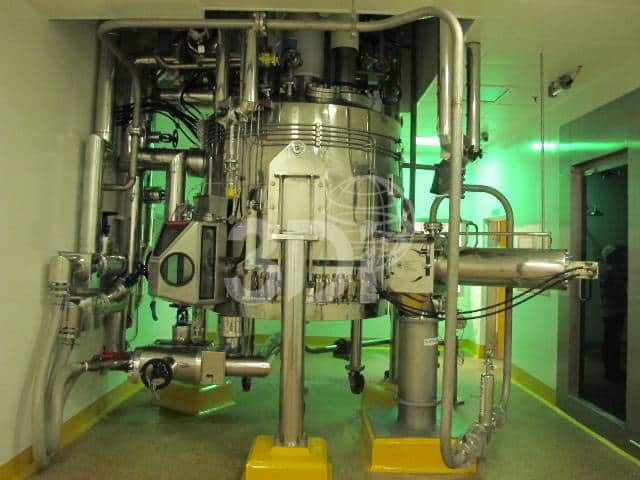
Used ANFDs can represent a viable option for process engineers seeking to reduce capital expenditure or shorten project timelines. However, careful assessment is essential to ensure suitability for the intended duty. The first consideration is vessel size and pressure rating. The original design pressure and temperature limits must meet or exceed the new process requirements. Any reduction in allowable limits due to age or modification should be clearly documented.
Materials of construction must be compatible with the process chemistry. Engineers should confirm the grade of stainless steel or alloy used, along with surface finish. In pharmaceutical applications, internal surface roughness and weld quality are particularly important, as they influence cleanability and contamination risk.
The condition of the filter plate and support structure is another critical area. Deformation, corrosion, or blocked perforations can compromise filtration performance. Replacement or refurbishment may be required, and this should be factored into project planning.
Agitator condition and alignment should be assessed carefully. Excessive wear on blades, shafts, or bearings can lead to vibration issues or reduced agitation efficiency. Seal condition is equally important, as failures can result in loss of containment or product contamination. Heating and cooling jackets should be pressure tested and inspected for fouling or corrosion. Poor heat transfer performance will directly affect drying times and energy efficiency.
Instrumentation and control systems may require upgrading to meet current operational or compliance standards. While mechanical refurbishment is often straightforward, control system modernisation should not be underestimated.
Process and Operational Considerations
When integrating an ANFD into an existing process, engineers should consider upstream and downstream interfaces carefully. Slurry feed consistency, solids loading, and solvent selection all influence filtration and drying performance. Solvent recovery systems should be matched to expected vapour loads, particularly during drying under vacuum. Inadequate condensation capacity can limit throughput or increase emissions. Cleaning requirements must also be addressed. For multi-product facilities, clean-in-place capability and ease of disassembly may influence equipment selection. Older units may require modification to meet modern cleaning expectations. Finally, safety considerations such as pressure relief, inert gas handling, and operator access should be reviewed in the context of current standards and site practices.
Agitated nutsche filter dryers offer a highly controlled and contained solution for solid liquid separation and drying in demanding process environments. Their versatility and ability to combine multiple process steps within a single vessel make them a strong choice for chemical and pharmaceutical production. For process engineers, successful application depends on a clear understanding of process requirements and careful evaluation of equipment condition, particularly when considering used units. With appropriate assessment and refurbishment, both new and used ANFDs can provide reliable, repeatable performance that supports long-term production objectives.